
What if we told you that you don’t have to be a doctor, engineer, or tech guru to move to Canada?
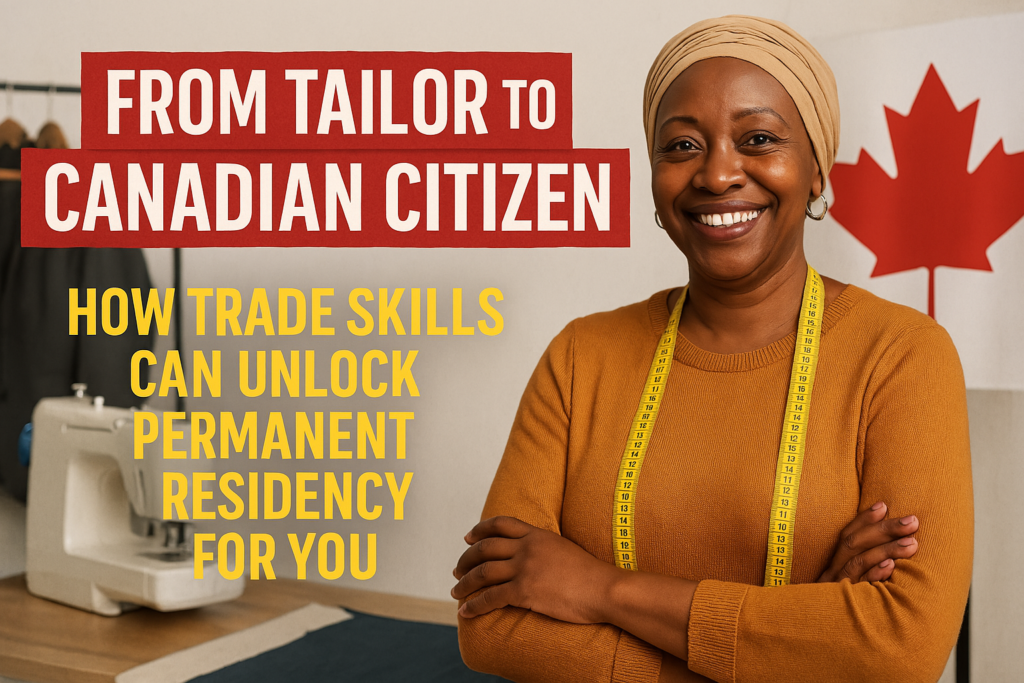
What if we told you that a tailor—yes, a fashion designer—moved to Canada and is now a full Canadian citizen?
This is not just a motivational tale. It’s a blueprint for anyone with a skill who’s willing to act fast, stay informed, and follow the right process. If you’re a Nigerian, Ghanaian, or African looking to migrate, this blog post is your goldmine.
🔥 Meet the Tailor Who Became a Canadian Citizen
Advertisements
In 2018, Aderonke, a Nigerian tailor, stumbled across an immigration opportunity under Saskatchewan’s Provincial Nominee Program (PNP). She wasn’t a full-time tailor—she had a regular job but did tailoring part-time.
By chance, she saw an NOC (National Occupation Classification) code for tailoring that was just made active. Right from her phone, lying on her bed, she submitted an Expression of Interest (EOI).
Advertisements
In 3 days, she got an invitation to apply. Fast-forward to 2024—Aderonke is now a Canadian citizen living with her family in Saskatchewan. And no—she didn’t use an agent. She did it herself.
Note: You’ll need to prove that you have very strong ties with your home country before countries like Canada will grant you immigration visas. Find out more
🇨🇦 Why This Story Matters
If Aderonke could migrate with her tailoring skill, what’s stopping you with your trade or professional skill? The reality is that Canada (and other countries like Australia, the UK, and Germany) have active migration channels for skilled tradespeople, including:
-
Tailors
-
Welders
-
Electricians
-
Bakers
-
Carpenters
-
Mechanics
-
HVAC operators
-
Elevator technicians
-
Farm supervisors
These are often less competitive than white-collar immigration streams.
✍️ What You Need to Start Your Trade Skill Immigration Journey
Aderonke outlined key documents and steps you must prepare before even dreaming about relocation:
✅ 1. Valid Passport
Without a valid passport, don’t bother starting. This is your first gateway document.
✅ 2. Educational Credential Assessment (ECA)
You need to verify your academic qualifications. Even if you’re a tailor with only WASSCE or a diploma, get them assessed. Recommended bodies include:
Advertisements
-
WES (World Education Services)
-
ICAS
-
IQAS
✅ 3. IELTS General Training (Not Academic!)
This is a requirement for immigration purposes. Most provinces accept a minimum band score of 4–5, depending on the program. But the higher your score, the better your chances.
✅ 4. Work Experience Documents
You must prove you actually do the skill you claim. Collect:
-
Employment reference letters (on company letterhead)
-
Apprenticeship certificates
-
Trade licenses or vocational training proofs
-
Tax clearance or personal income tax records
-
Payslips or salary receipts
🧾 Step-by-Step: How the Application Works
Aderonke broke it down in simple terms:
Advertisements
🟢 Step 1: Choose a Province
Examples: Saskatchewan, Alberta, Manitoba, New Brunswick.
Visit their official sites and search for “Expression of Interest” or “PNP”.
🟢 Step 2: Submit Expression of Interest (EOI)
Fill in details like your:
-
Passport number
-
Current residence
-
NOC occupation
-
Language test results
Tip: This process is free—you don’t need to pay anything until you’re invited to apply.
🟢 Step 3: Get an Invitation to Apply
If you’re selected during the province’s draw, you’ll receive an invitation via email.
🟢 Step 4: Pay Application Fee & Upload Docs
This is where documentation matters. Upload all supporting evidence and pay the processing fee via the provincial portal.
🟢 Step 5: Wait for Decision
Current timelines range from 6–9 months for most PNP streams. Express Entry may take longer.
❌ Don’t Fall for These Mistakes
-
Using Agents blindly without knowing what they’re submitting on your behalf
-
Submitting incomplete or unverifiable documents
-
Not having a valid passport
-
Mixing up IELTS Academic vs General
-
Thinking you’re “not educated enough” to apply
☕ Need Help? Coffee Chats > Agents
Aderonke is not an immigration consultant, but she offers coffee chats—casual, affordable sessions where you can get guided steps, clarity, and answers to your unique questions.
“Many agents have ruined people’s chances with misrepresentation. Learn to do it yourself—or at least understand what’s being submitted for you.” – Aderonke
💬 Final Words: “Wake Up and Do It Now”
Migration is not a miracle. It’s not a game of luck. It’s about:
-
Being informed
-
Preparing well
-
Acting fast
As WakaWaka Doctor says:
“The best time to act is now. The second best time? Still now.”
✅ Key Takeaways for Migrating via Skilled Trades
| What You Need | Why It Matters |
|---|---|
| Valid Passport | You can’t begin without it |
| ECA Report | Verifies your academic level |
| IELTS General | Immigration requirement |
| Work Experience Proof | Shows you have the actual skill |
| DIY Mindset | Avoid misrepresentation by agents |
| Quick Action | NOC codes close fast when quotas are met |
🧠 SEO Keywords for This Post
-
How to migrate to Canada with a trade skill
-
Canada PNP for tailors and artisans
-
Trade jobs in Canada for Africans
-
Canada PR through skilled trades
-
Canadian immigration for welders, carpenters
-
Saskatchewan PNP for skilled workers
-
Express entry vs PNP Canada