
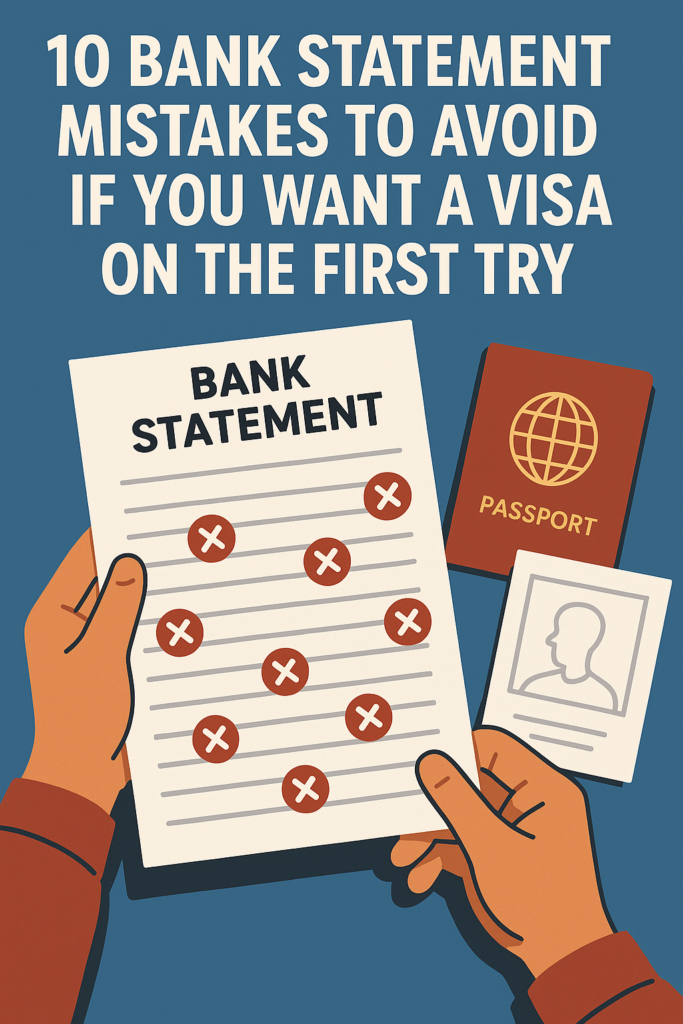
Bank Statement Mistakes to Avoid if You Want a Visa on the First Try
Absolutely! Here’s a super SEO-rich blog post based on the video transcript you provided. It’s crafted to rank well on search engines for keywords like “visa bank statement mistakes,” “how to avoid visa refusal,” and “proof of funds for visa.”
Advertisements
Getting a visa can be stressful—especially when your dreams of studying, visiting, or working abroad are riding on it. One of the most common reasons applicants face visa refusals? Mistakes with their bank statements.
Whether you’re applying to Canada, the UK, the U.S., or any other country, avoiding these costly errors can make the difference between a visa approval or denial.
Advertisements
Here are the top 10 bank statement mistakes you must avoid to increase your chances of success—especially as an applicant from Africa or other developing countries.
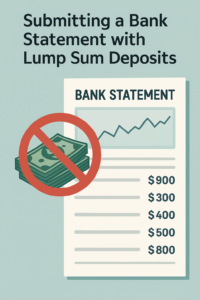
🚩 1. Submitting a Bank Statement with Lump Sum Deposits
Visa officers look at your financial history, not just the balance. Large, unexplained deposits (also called “lump sums”) are a red flag.
Why? Because it appears you borrowed or temporarily transferred money just to make your bank account look good. Visa officers want to see consistent, legitimate income patterns over several months.
Solution: Start preparing months in advance by “running” your account—make regular deposits and avoid sudden large inflows unless they are documented (e.g., salary, sales revenue, etc.).
🚩 2. Using Fake Bank Statements
Let’s be blunt: never use a fake bank statement.
With today’s advanced technology and AI, embassies and visa officers can detect fake documents easily. Not only will your application be refused, but you may also be banned for up to 5 years or “shadow-banned,” meaning your name is flagged in visa systems without your knowledge.
Advertisements
Real Talk: Many agents promise “legit statements” — but are using the same fake statement across multiple clients. Avoid this trap at all costs.
Also Read – MIGRATE TO CANADA WITH YOUR WIFE/HUSBAND
🚩 3. Submitting Statements from Unknown or Untraceable Sources
If you use a third-party sponsor, make sure their name, identity, and connection to you is clearly established.
✅ Provide:
Advertisements
- Passport data page of the sponsor
- Photographs showing your relationship over the years
- A written sponsorship letter
- Evidence linking them to the business or bank account
Visa officers are trained to detect inconsistent or suspicious sponsor claims.
🚩 4. Not Matching Sponsor Identity with Account Name
If the bank statement is from a business, but the business name doesn’t match the sponsor’s name (or your relationship is unclear), it raises questions.
Fix it: Provide:
- Business registration documents
- Proof your sponsor owns the business
- Invoices or sales receipts
- A letter from the business verifying the relationship and support
🚩 5. Allowing Bank Balance to Drop After Application
This is a silent killer of visa approvals.
Even if your statement was perfect when you submitted it, some embassies call banks to verify the balance before a final decision is made.
If your account had $50,000 when you applied, but only $7,000 two months later, that could get you rejected.
Tip: Leave the funds untouched—or even better, increase the balance to show financial readiness.
🚩 6. Changing Sponsors Too Often
Changing your bank statement sponsor between multiple visa applications signals instability and desperation.
If you used Sponsor A in your first application, then switched to Sponsor B after being refused, and then to Sponsor C—officers will question the credibility of your sponsors and your ability to fund yourself.
Plan ahead: Use a sponsor who can stick with you across multiple attempts if needed.
🚩 7. Submitting Undocumented Business Income
Using a personal account for business is common in Africa—but it requires extra effort to convince a visa officer.
What you should do:
- Write a letter explaining your business operations
- Attach invoices, receipts, or proof of business activity
- Include photos of you at work (e.g. selling goods, in the market, managing stock, etc.)
🚩 8. Taking Loans Without Proper Explanation
Borrowing to fund your visa journey? You MUST explain where the loan came from.
Wrong approach: Showing a bank statement with a loan deposit that says “credit facility” and no explanation.
Right approach:
- Show the loan agreement
- Provide the lender’s name and business details
- Explain how you’ll repay the loan and how it supports your visa plans
🚩 9. Creating a New Bank Account Just Before Applying
Opening a brand-new account and dumping large sums into it is suspicious.
Visa officers might ask:
- Why was this account created recently?
- Where did the money come from?
- Why isn’t there a transaction history?
Best practice: Use an existing account with history—or explain the new account with a notarized letter or bank letter confirming the purpose of the account.
🚩 10. Submitting Incomplete or Inconsistent Documentation
From missing sponsor photos, to no proof of business ownership, to statements lacking memos—small details matter.
Visa officers want to trust you. You build trust by being thorough, transparent, and proactive.
✅ Include:
- A cover letter explaining each financial document
- Memos in transactions (like “Tuition payment,” “Salary,” or “Business income”)
- Consistent formatting across all documents
🧠 Bonus Tips
- Run your account months in advance with predictable transactions
- Don’t tamper with the balance after submitting your visa
- Always assume the officer will verify your documents
- Never rely solely on agents — learn and verify everything yourself
🎯 Final Thoughts: Think Like a Visa Officer
Visa officers are trained to spot red flags. They’ve seen it all. Your job is to give them no reason to doubt you. Be honest, prepare well, and document everything.
At the end of the day, it’s not just about having money—it’s about proving the money is real, accessible, and sufficient.
💬 Did this guide help you?
Leave a comment below, share it with a friend applying for a visa, or bookmark it for later.
🔔 Stay informed with more tips from us on study and travel opportunities!