
Easiest Ways to Relocate to Japan
If you’ve ever dreamed of living in Japan — whether for work, study, or simply to experience a new culture — the good news is relocating to Japan is absolutely possible, and it doesn’t have to be complicated.
Advertisements
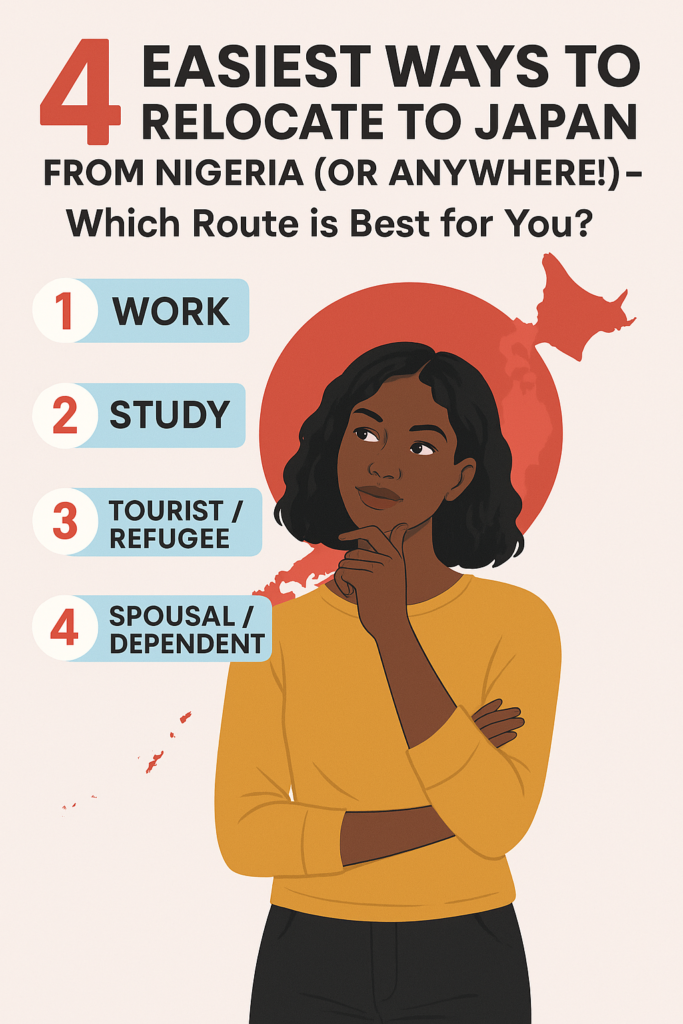
In this guide, we’ll break down the 4 easiest and most popular routes to migrate to Japan from Nigeria or anywhere in the world. Whether you’re aiming for a better career, further education, or reuniting with loved ones, Japan offers various visa options that can help you make that move.
Let’s dive in and explore the path that fits you best!
Advertisements
1. Relocating to Japan Through a Work Visa
Work Visa is one of the most straightforward and practical routes for moving to Japan — especially if you’re skilled in fields like IT, Engineering, Teaching (ALT), or Translation.
🔑 What You Need:
-
A job offer from a company in Japan
-
A Certificate of Eligibility (CoE) from your employer
-
A valid international passport
-
Job-related qualifications or experience
Once your Japanese employer offers you a position, they will sponsor your visa and apply for your CoE. After receiving the CoE, you’ll take it to the Japanese Embassy in your country to get your work visa stamped.
💼 Where to Find Jobs That Sponsor Visas:
Note: If you work in healthcare, you’ll most likely need Japanese language skills to communicate with patients. Consider learning Japanese or taking a different route if language is a challenge.
Cheapest European countries to study in 2025 and 2026
2. Relocate to Japan as an International Student
Coming to Japan on a student visa is another great path, especially if you’re looking to upgrade your qualifications and later switch to a work visa.
There are three main categories under this route:
-
📘 Undergraduate Programs
-
🎓 Postgraduate (Master’s & PhD)
-
🈶 Japanese Language Schools
📚 Why This Route is Great:
-
You can work part-time while studying
-
Studying Japanese makes it easier to get hired later
-
Student visa holders can transition to work visas after graduation
💰 Tip:
Tuition in Japan can be expensive — look out for scholarships such as:
-
MEXT Scholarship (Japanese Government)
-
JASSO
-
Scholarships by private universities
Language school programs typically last 6 months to 2 years and cost around ¥400,000 – ¥800,000/year, but they are a solid investment for getting into the Japanese job market.

3. Relocate Through a Tourist Visa and Apply for Refugee or Work Status
Can you convert a tourist visa into a work visa in Japan?
Advertisements
✅ Legally, NO — however, many people apply for refugee or humanitarian status while in Japan, which allows them to apply for a work permit after some time.
⏳ What to Expect:
-
Refugee work permit takes 3–6 months to process
-
You cannot legally work until the permit is approved
-
You need to come with enough funds to support yourself for 6 months
⚠️ This route is riskier and less stable than the others, but some people have used it successfully with proper planning and support.
4. Spousal or Dependent Visa – Family Route
If you are married to a Japanese citizen, a permanent resident, or someone with a long-term visa in Japan, you can apply for a spousal or dependent visa.
This is one of the fastest and most flexible visas in Japan. It also allows you to work full-time without many restrictions.
Advertisements
❤️ Who Can Apply?
-
Legal spouses of Japanese nationals or permanent residents
-
Children or dependents of legal residents in Japan
✅ Which Route to Japan is Best for You?
| Route | Best For | Visa Type | Difficulty |
|---|---|---|---|
| Work | Skilled professionals (IT, ALT, Engineering) | Work Visa | ⭐⭐⭐ |
| Study | Students & future workers | Student Visa | ⭐⭐ |
| Tourist/Refugee | Those who want to try their luck or need protection | Refugee/Change of Status | ⭐⭐⭐⭐ |
| Spousal/Dependent | Married or family-based | Family Visa | ⭐ |
🧠 Final Thoughts – Act Now, Not Later
Relocating to Japan can be a dream come true — but only if you start now. Immigration rules change frequently. What’s open today might close tomorrow. So don’t wait.
💡 Pro Tips:
-
Start by getting a valid passport
-
Learn basic Japanese language skills — even conversational level helps
-
Save up enough funds to support yourself
-
Avoid shady agents — apply yourself or through trusted consultants
-
Follow YouTubers, TikTokers, or Facebook creators sharing real-life Japan tips
📲 Want More Relocation Tips?
Follow @NigerianInJapan for:
-
New job links and application tips
-
Visa breakdowns & how-tos
-
Real-life vlogs from Japan
Did this help? Share it with a friend who’s dreaming of moving to Japan 🇯🇵 💼 🎓
Got questions? Drop them in the comments or send me a DM. See you in Japan!